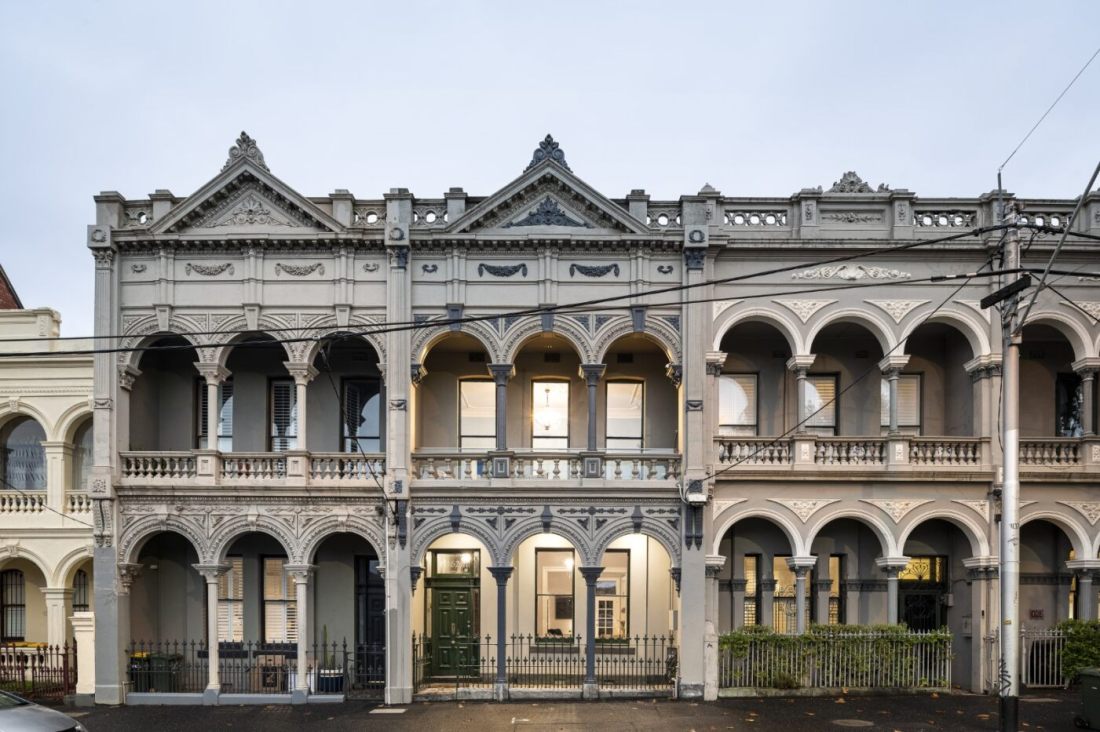
I recently had a mortgage broker request eight desktop valuations from eight of the biggest lenders in Australia on my property – the big four banks plus Macquarie, Bank of Melbourne, ING, and Bankwest.
The valuations varied by 25 percent from lowest to highest.
Granted, these were desktop valuations, but full valuations would have yielded a similar variance.
In my heart of hearts, as a real estate agent who has seen thousands of properties in Melbourne, I know that three of the valuations are overly optimistic.
Three are about right, and two are a little conservative.
Common belief tells us that bank valuations are conservative.
They are not. Certainly not these days.
Especially if you’re on a high income and are a relatively low risk borrower whom they want to lend money to.
Then they tend to be overly optimistic on the value of your property, so they can lend you as much as possible.
If I had a dollar for every time a vendor told me, “but the bank valuation was X and banks are conservative so I would have thought our house was worth Y” (with X > Y)… Well, then I wouldn’t need to borrow money from a bank. I’d be a cash buyer!
Bank valuations, like council capital improved values on rates notices, are about as helpful in determining value as asking the neighbours what they think your place is worth… The nice ones are overly optimistic, and the grouchy ones have never even peaked inside your front fence and wouldn’t have a clue.
How do I know that the bank valuers are often pretty clueless?
Because they call me all the time asking for intel on various properties that I’ve sold, and it’s very clear that they don’t know my market at all.
It’s not their fault – they service tens of square kilometres of real estate across dozens of suburbs and are not specialists in any one area.
They don’t all understand that Williams Road sells at a discount to Orrong Road or that some pockets of Prahran sell for more than some pockets of Toorak on a per square meter basis.
Now, even as someone who considers themselves an expert on single and double fronted period homes in Stonnington, I am the first to admit that when it comes to valuations, we get it wrong more than we get it right.
And while it might seem like a cop out for a trusted property advisor, I actually don’t know what your place is worth.
I have an idea on what it could be worth based on comparable sales and a bit of a gut feel compared to other homes.
But I don’t know how the current crop of buyers in today’s market will respond to it.
There are too many variables, not least of which being that the best two buyers for your home right now might be $200,000 ahead of the next two best buyers for your home right now.
And if one of said buyers buys another property the day before your auction, yours might sell for $199,000 less than had they not bought the other property.
But those are the uncontrollables.
And we only know how to control the controllables…
How to best present your home, how to best market your home and create the competition necessary for it to be worth its full potential in today’s market
But I certainly won’t be making a bet on valuing it down to the nearest $50,000 or even $100,000.
That is a fool’s game.
And just as you might think that banks should be conservative, we are conservative.
Why? Because we don’t want you to invest your time, money and emotion in a sales exercise that yields zero buyers wanting to buy your property at the price we suggested it should be worth.
And we don’t particularly like to work for free.
We much prefer to under promise and over deliver.
Some agents feel the need to “win” the business by going along with a vendor’s aspirational price, or the price that another agent promised, or a bank valuation.
Unfortunately, many vendors, even very astute, rational and market educated vendors can have clouded judgement when it comes to their own home, and are often swayed by the agent who tells them what they want to hear.
It’s human nature to want to go with the agent that was “the most enthusiastic” about your home.
But it can be a recipe for disaster.
It is wiser, instead, to list your home with the agent whom you trust has your best interests at heart, and has the skill, acumen and track record to best represent your home and tell you what you need to hear rather than what you want to hear.
Not the one that agrees with the high bank valuation.

 David Sciola