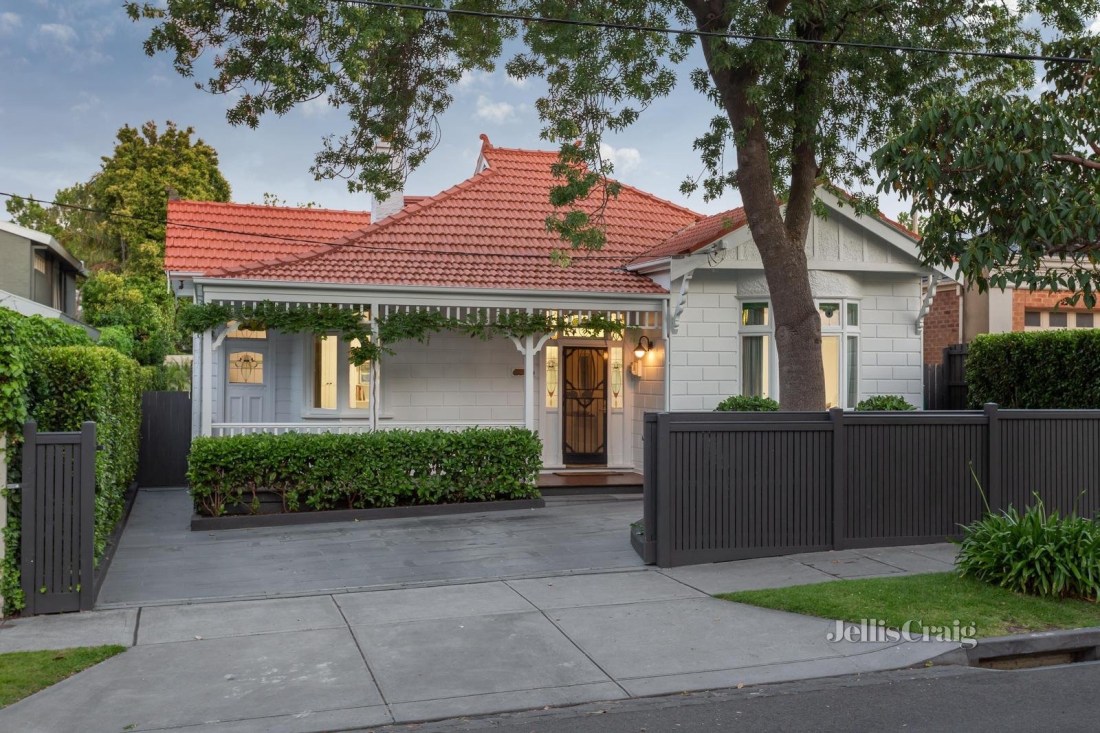
Have you ever noticed how there aren’t any sales in a street for several years, and then suddenly there are a string of sales in short succession?
“Why is everyone selling?”, is the typical response from buyers when they notice successive or concurrent sales in the same street.
Very rarely is there a sinister reason behind the sudden exodus…like a monstrous development or infrastructure project being approved, or a particularly nightmarish neighbour, or perhaps the street falls in a flood zone and the insurance premiums just went up fivefold.
But this is highly unlikely. Most of the time it is pure coincidence.
We just sold four houses in Stuart Street, Armadale within three months. Not only were they in the same street, but they were on the same side of the street and just a few doors away from each other. 21, 29, 37 and 41 Stuart Street.
It seems unusual but it was purely chance timing. All four vendors had different and unrelated reasons for selling – upsizing, downsizing, de-vesting, etc.
All four sales went exceptionally well. All four results exceeded expectation – with three selling under the hammer at auction with strong competition and the fourth selling after just 10 days on market.
Some streets seem to turn over more than others.
Dense streets in the inner city with small two-bedroom worker’s cottages, like Pridham Street in Prahran, have a high transaction rate – often six to eight sales per year.
Other streets such as Kingston Street, Malvern East in the Gascoigne Estate, with fewer, larger homes, have a very low turnover rate – only five sales in the last decade.
Clearly this is probabilistic – an apartment block with 100 apartments will have a lot more turnover than a boutique block of four. Long streets with many houses see more sales than short streets with fewer houses.
Yet it is always strange when one street has a spate of sales in quick succession, while the adjacent street has none for years on end.
Just remember that if you observe this phenomenon as a buyer, the chances are there is nothing wrong with the street, it’s just a coincidence.
But you should still check with Council for any approved developments nearby, just in case!

 David Sciola
I wonder if a third explanation for these short-successive sales is sometimes the pricing information revealed by the first sale. This maybe used to happen more in the late ’90s and early ’00s when residents were often genuinely surprised by the prices fetched by nearby property sales. Perhaps after a multi-decade property boom, this type of shock-to-action is now less common. Certainly it wouldn’t seem to explain Stuart Street, which happened too quickly to explain in this way. But it would be interesting to know if coastal or attractive regional towns experienced some of this effect during the pandemic period.
I agree that would definitely be a part of it. The social proof of seeing a neighbouring property sell for a strong price, which might seed the idea of selling, or provide some confidence that their home may also sell well.